
Google Shopping Management Built Around What You Actually Keep
- Get the right products in front of shoppers at the right margin.
- Improve feed quality, campaign structure, and product-level visibility.
- See which sales are driving contribution margin, not just topline ROAS.




See Where Your Shopping Growth Is Getting Stuck
Your complimentary session reviews feed, campaigns, tracking and margins to find wasted spend and products worth scaling.
-
Bedworks

Thanks guys! Couldn’t be happier. OMG are amazing at PPC.
-
Mavi Jeans

Love the team at OMG. They’re experts at setting up well targeted PPC campaigns and have done a great job so far on moving our keyword search rankings up to the first pages.
-
RedSeed

We started working with Online Marketing Gurus after trying to get cut-through with two different agencies. Within the first three months of getting live with OMG our PPC campaigns were outperforming any of the previous campaigns we had run.
-
Tea Drop

Elodie our AM is lovely to work with. Great service and we have seen a significant improvement through our PPC.
-
Snotty Noses

My e-commerce business has been working with OMG for 12 months. They have coordinated PPC, social ads and SEO organic reach.
-
Bulk Nutrients

We love working with the guys and girls at OMG. Emily, Dan and Wendy are great to work with on PPC.
-
Astra Limousines

OMG really are the Gurus the team have been looking after our PPC and we have had huge results. Great company to work with.


Sound Familiar?
Your Google Shopping Margin Isn’t
Where It Should Be
Revenue Is Rising. Profit Isn’t.
Performance Max can drive more conversions without prioritizing the products that leave you with the most margin. Topline sales look healthy. Contribution margin tells a different story. Without product-level targets and tighter budget control, growth can quietly become less profitable.
Your Best Products Aren’t Getting Enough Visibility
Google can’t promote products it doesn’t understand. Weak titles, missing attributes, feed errors, and poor categorization can hold high-margin products back while weaker lines absorb attention. Fix the data, and the algorithm can finally see what’s actually worth pushing.
Performance Max Is Harder to Read Than It Looks
Performance Max combines multiple channels, signals, and automation into one campaign type. The results can be useful, but the detail isn’t always obvious. Without disciplined structure, exclusions, feed segmentation, and tracking, it’s difficult to know what’s working and why.
What We Manage
The Feed, the Spend, and the Products Worth Scaling
Google Shopping performance depends on more than getting products approved. We connect product data, campaign structure,
and margin signals so budget follows the items with the strongest commercial case. Better inputs. Better decisions.
Less money wasted on products that were never worth pushing.

Product Data Built to Earn More Visibility
We improve titles, attributes, categories, images, identifiers, and Merchant Center health so Google has a stronger basis for matching products to relevant searches. Cleaner feeds reduce friction and give high-potential items a better chance to appear.

Budget Allocation Based on Product Economics
We group products by margin, demand, seasonality, and buying intent, then shape bids and spend around what each item can realistically return. High revenue alone isn’t enough. The product still needs to contribute after costs.

Performance Max with Profit Signals Built In
We guide Performance Max with stronger feeds, structured asset groups, exclusions, audience inputs, and conversion goals tied to product value. Automation still makes the moves. We make sure it’s playing the right game.
See How Much More Profitable Your Google
Shopping Campaigns Could Be
How It Works
From Product Data to Margin-Led Growth
Google Shopping works when the feed, campaign structure, and product economics move together. We fix the inputs,
organize spend around profitability, and keep refining as demand, inventory, competition, and margins change.
We review titles, descriptions, attributes, categories, identifiers, images, pricing, availability, and Merchant Center diagnostics. The goal is simple: help Google understand each product, reduce avoidable disapprovals, and give higher-potential items a stronger chance to appear for relevant searches.
We group products by contribution margin, demand, seasonality, inventory, and buying intent, then shape bids, budgets, and campaign types around what each group can realistically return. More revenue isn’t automatically better. The products still need to contribute after media and operating costs.
Once campaigns are live, we monitor search behavior, product-level performance, feed health, conversion value, ROAS, and margin signals. We reduce spend where economics weaken, expand products showing profitable potential, and adjust structure as the catalog and market evolve. Test. Learn. Reallocate.
Trusted by 1,000+ Retailers Across Diverse Markets
We’ve managed paid media for eCommerce brands across fashion, homewares, beauty, automotive, technology, and more. Different catalogs.
Different margins. But always the same commercial question: which products deserve more budget and which ones are quietly holding growth back?






In The Last 12-months We Delivered Our Paid Search Clients
6.6M+
website visitors
3.1M+
tracked conversions
$34M+
tracked revenue (USD)
Case Studies
Retail Growth Measured Beyond Topline Sales
Successful case studies show what changed, what improved, and what the business kept after costs. More sales. Better margins.

Turning Product Feeds Into Predictable Revenue
Fashion label Réalisation Par has partnered with OMG since 2025 to scale its Google Ads account without giving up efficiency. The account now returns 44.5x year to date and 53x over the past 30 days, with Performance Max Smart Shopping delivering 324 conversions at 64.6x ROAS.
44x
Each $1 invested delivered $44.5 in revenue year-to-date
64x
Conversions generated by the PMax Shopping campaign

More Paid Media Case Studies

168%
Specialty Equipment is a family owned and operated business since 2005, on a mission to become the one stop shop for flooring professionals. The business offers floor scraper parts as well as repairs and technical assistance. They partnered with OMG in May 2021 to improve visibility around key focus terms, increase keyword indexation and support…

Specialty Equipment
Construction

196%
Gifts for Good is a corporation dedicated to empowering the world to help people and the planet through gift giving, envisioning a world where every gift purchased gives back. Their gifts have supported the work of over 60 nonprofits and social enterprises around the globe.

Gifts for Good
Retail & E-Commerce

164%
Kalon Surf aims to be the premier surf school and resort in the world. Work hard, play hard is at the center of what they do, and through that ideology they created the best surf experience they always wanted to have. Kalon Surf reached out to Online Marketing Gurus in January 2020 for an integrated…

Kalon Surf
Hospitality
Why Choose Us?
Why OMG Is Uniquely Positioned to Manage Your Google Shopping
Google Shopping needs more than feed fixes and higher bids. We connect product data, campaign structure, margin signals,
and budget control so every decision reflects what the business keeps after costs.
We Partner with the Best
-

Google Premier Partner
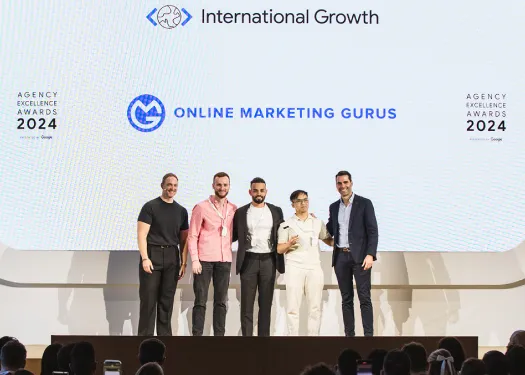
#1 PPC agency for international growth awarded by Google
-

Microsoft Premier Partner
Bing and Microsoft agency partner premier agency top 5
-

ChatGPT Agency partner
ChatGPT agency partner first to launch in Australia


Three Google Shopping Advantages Other Agencies Can’t Match
Gurulytics Shows What the Platform Leaves Out
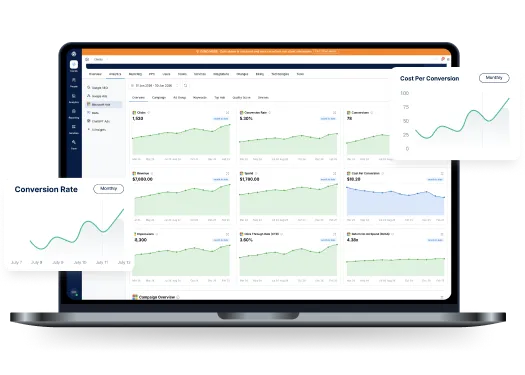
Google reports revenue well. Margin is another story. Gurulytics brings spend, sales, ROAS, and available profitability signals into one view, helping you see which products are creating value and which are simply creating activity.
Retail and eCommerce Specialists Who Think Product First
Google Shopping sits where paid media, product data, inventory, pricing, and margin meet. Our specialists understand that mix, so campaign decisions reflect what each product can contribute after costs, not just how many clicks it attracts.
Feed Changes Logged With the Discipline of Code
Feed edits can affect visibility, approvals, and performance across an entire catalog. We document changes, track what was adjusted, and review the impact before making the next move. Fewer mystery fixes. More accountable feed management.

Meet the Shopping Team
Google Shopping Pros Who Think
Beyond the Feed
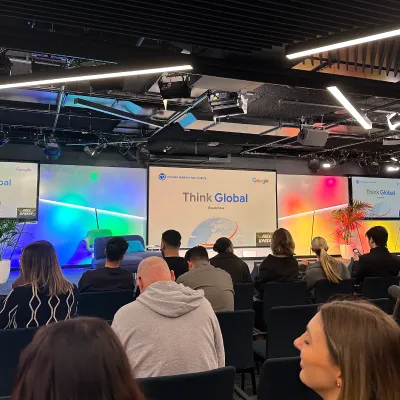
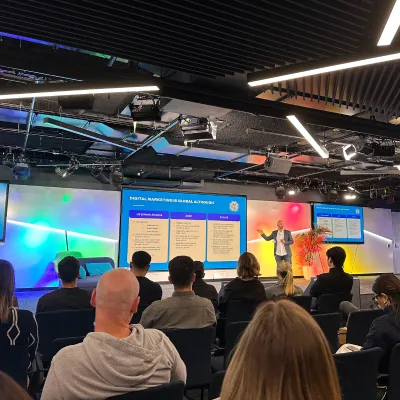
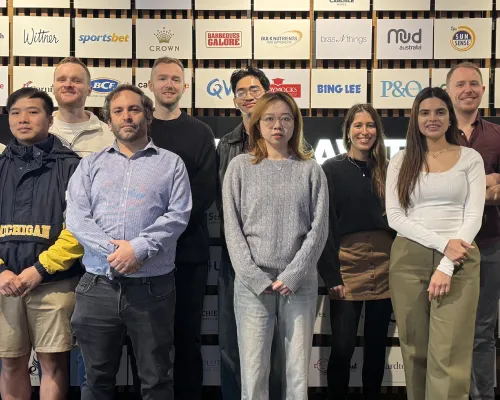
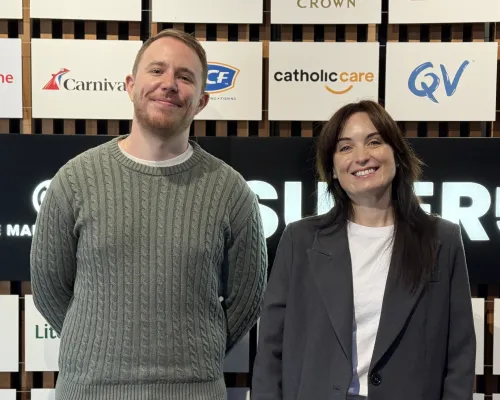
One Team. Product-Level Decisions With Business Context.
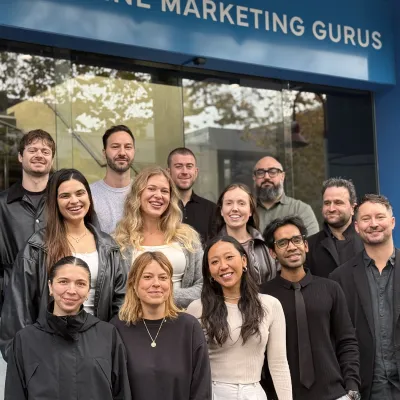
Your account is managed by specialists who understand Merchant Center, product economics, campaign behavior, and budget control. You’ll get focused testing, direct explanations, and decisions shaped by what each product contributes after costs.

David Moorcroft
Head of Paid

Sophie Chugg
Account Director Paid Media

Andrew Sutton
Paid Search Manager

Jamie Swanson
Paid Media Manager
1,000+
Clients monthly
100+
PPC specialists
60+
Global industry awards
150+
Industries
More Paid Media Services
Add the Channels That Support the Sale Before and After the Click
Google Shopping captures product demand, but it rarely works alone. We connect complementary paid channels around different stages of the buying journey, helping you create demand earlier, recover missed shoppers, and reduce reliance on a single campaign type.
Meta Ads
Build product awareness across Facebook, Instagram, Messenger, and WhatsApp with creative-led prospecting, catalog campaigns, and remarketing. Meta can introduce products before shoppers start searching, then bring interested audiences back with more relevant messages, offers, and product-led creative when they’re closer to buying.


Google Ads
Support your Shopping strategy with Google Ads campaigns across Search, YouTube, Demand Gen, and Performance Max. Each campaign type plays a different role, from capturing active product searches to building demand earlier and recovering missed opportunities. One ecosystem. Clear campaign roles. Less overlap across the path to purchase.

ChatGPT Ads
Explore emerging paid opportunities within AI-led discovery as shoppers increasingly use conversational tools to compare products, research options, and shape buying decisions. We help brands assess where ChatGPT Ads may fit alongside product content, search visibility, paid media, and the wider journey from discovery to purchase.

Microsoft Ads
Extend product visibility beyond Google with Shopping campaigns across Bing and Microsoft’s wider advertising ecosystem. Microsoft Ads can help reach additional search demand, test different audience segments, and diversify acquisition without forcing Google Shopping to carry the full weight of your product strategy.

Client Testimonials
What OMG PPC Clients Actually Say
Real feedback. Real campaign experience. Listen to what our clients have to say.
Public, searchable and available before you call us.
 C. Alfonso Carrillo
21/08/26
C. Alfonso Carrillo
21/08/26
Really enjoyed working with Online Marketing Gurus. The team was friendly, responsive, and genuinely took the time to understand my business and what I was trying to achieve. Their support made a real difference in helping me improve my online presence and move my business forward. I always felt like they were invested in the project and not just checking boxes. Great communication, great people, and a team I’d happily work with again. Definitely recommend them!
 Jose Luis Estrada
20/08/26
Jose Luis Estrada
20/08/26
Great experience collaborating with OMG(Online Marketing Gurus) Crew. From my side as a PM, I really appreciate that they don't waste time: they show real metrics, stick to agreed milestones, and execute without unnecessary fluff. It’s refreshing to work with vendors who keep operations tight and communicate fast.
 Cristina Serratos
19/08/26
Cristina Serratos
19/08/26
Really happy with my experience with Online Marketing Gurus. The team was easy to work with, communicated clearly, and actually took the time to understand what we needed before getting started. They were quick to respond to questions and feedback, and the quality of the work was consistently good. I also appreciated that they kept us updated throughout the process instead of leaving us wondering what was happening. Overall, a professional and reliable team. Would definitely recommend them.
 Eduardo Vazquez
19/08/26
Eduardo Vazquez
19/08/26
We’ve had a great experience working with Online Marketing Gurus. Their team has been professional, approachable, and highly organised throughout the project. They made the delivery process feel straightforward by communicating clearly, keeping us informed of progress, and being responsive whenever we needed support or clarification. It’s clear they care about delivering quality work and building a genuine partnership with their clients. We’ve appreciated their proactive approach, attention to detail, and ability to keep everything on track. I’d happily recommend Online Marketing Gurus to any business looking for a dependable digital marketing team.
 Hollie Briant
19/08/26
Hollie Briant
19/08/26
I have had a fantastic experience with OMG’s Dallas team. The transition was seamless, with the full audit and migration completed in just three weeks without losing a single ranking or campaign. Ryan has been hands-on throughout, providing quick decisions, clear direction and genuine senior-level support. The team is responsive, reliable and delivers. A true five-star experience and a partner we’re very happy to continue working with!
 Joshua Pargin
19/08/26
Joshua Pargin
19/08/26
What has impressed us most about working with Ryan is that he approaches the relationship as a true business partner. He took the time to understand our goals, challenges, and where we wanted to take the business before recommending a strategy. The result was a clear, well-structured growth plan backed by strong account management and communication. Ryan and the Dallas team have made us feel supported, valued, and confident in the direction we’re taking.
 Lisa Vespoli
19/02/24
Lisa Vespoli
19/02/24
I am extremely pleased that I found Online Marketing Gurus and decided to bring them on to help with my SEO strategy and needs. I had originally partnered with another SEO Agency, and I was far from pleased with their services. OMG was a breath of fresh air in terms of their open line of communication and transparency, strategic analysis and goals, and their willingness to ensure I was as involved as I would like to be every step of the way. My business encountered complexities that OMG was able to uncover where the other agency had not, and even escalated my situation to top experts within the organization to assist in creating the best possible solution. OMG went above and beyond to provide top notch support and I am grateful for their true partnership and the great relationship we have built along the way. I highly recommend OMG's offering in an industry where this exceptional level of service can be hard to come by.
 Kathy Ando
07/04/23
Kathy Ando
07/04/23
Andy and Kevin are excellent partners. I am an eCommerce executive and have worked on big enterprise sites. I had some doubt given their reasonable prices and I was pleasantly surprised. I will be working with them going forward on my site as well as companies I advise for or work for in the future
 Susan Meurer
30/08/22
Susan Meurer
30/08/22
Our experience with OMG has amazing ~ Nick has been a wonderful partner and we are very pleased with the results.
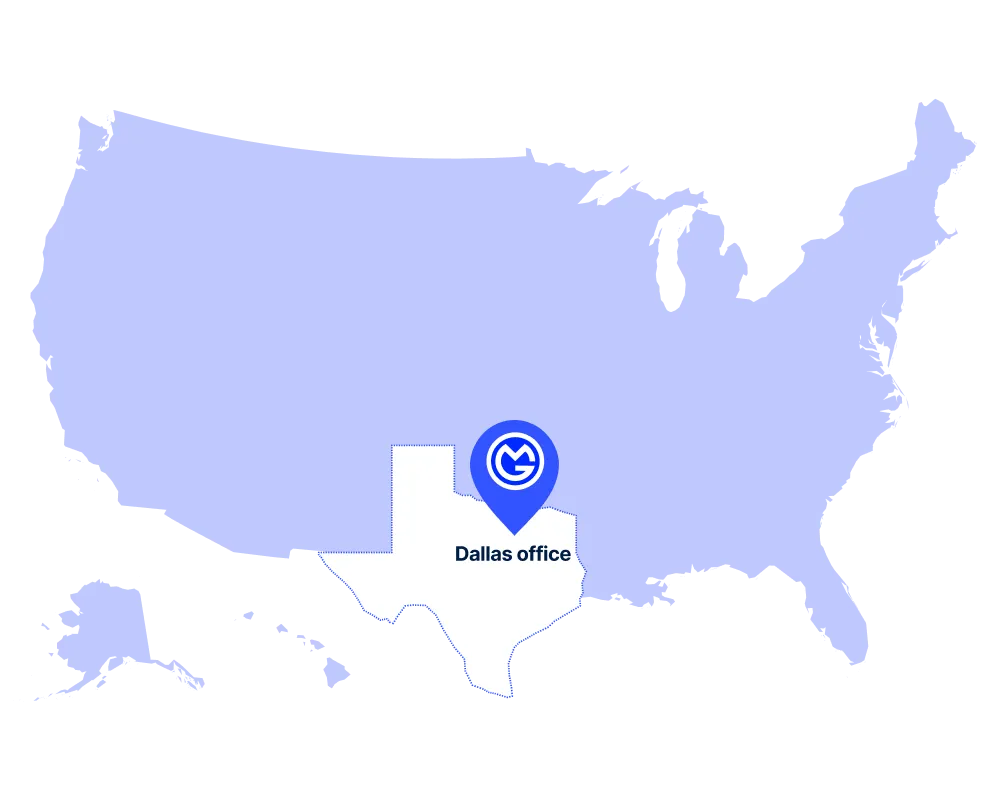
Google Shopping Built for eCommerce Growth Across the United States
Whether you’re targeting one region or scaling nationwide, we manage feeds, campaigns, and product-level spend around visibility, margin, and profitable growth.
- California
- Florida
- Illinois
- Nationwide
- New York
- Texas
Questions Frequently Asked About
Google Shopping Advertising
Get practical answers before hiring a Google Shopping Ads agency.
Standard Shopping offers more direct control over product groups, bids, search terms, and exclusions. Performance Max uses automation across Google inventory to pursue defined goals. Both can work well. A skilled Performance Max agency should use each where it adds the most value, rather than forcing every product into one campaign type.
There isn’t one universal target because ROAS only makes sense alongside margin. A 4x ROAS on a product with a 60% margin may be profitable, while the same return on a 15% margin product may lose money. Google Shopping management should set targets around contribution margin, not topline revenue alone.
Your feed needs accurate titles, descriptions, prices, availability, images, categories, identifiers, shipping details, and landing-page information. Missing or inconsistent data can limit visibility or trigger disapprovals. Your Google Shopping Ads agency should treat feed quality as part of campaign performance, because weak product data gives Google fewer useful signals to work with.
No fixed catalog size guarantees success. A store with ten high-demand, profitable products may have more potential than one with thousands of weak or low-margin items. The real questions are search demand, product economics, feed quality, pricing, and conversion rate. Expert Google Shopping agencies assess commercial viability before recommending spend.
Yes. Our Google Shopping Ads management can include Merchant Center setup, feed reviews, diagnostics, attribute corrections, and disapproval support. Common issues include mismatched prices, missing identifiers, image problems, landing-page errors, and policy flags. We address feed health early because campaign structure can’t compensate for products that Google can’t approve or understand properly.
Feed updates and Merchant Center reviews may begin affecting eligibility within days, but campaign performance usually takes longer to stabilize. Timing depends on catalog quality, conversion volume, budget, competition, tracking, and account history. Most accounts need several weeks of testing and refinement before reliable patterns emerge, especially when Performance Max is learning from limited data.
Yes, local inventory ads can help eligible retailers show nearby shoppers which products are available in physical stores. They require accurate local product data, store information, inventory updates, and approved Merchant Center setup. A Google Shopping Ads agency should confirm eligibility, feed readiness, and operational accuracy before recommending them as part of the campaign mix.
Costs vary by product category, competition, CPCs, conversion rate, margin, catalog size, and campaign structure. There’s no universal minimum that suits every retailer. A responsible Google Shopping agency should model expected economics before launch, then manage bids and budgets against contribution margin, not simply push spend because the platform reports more revenue.
Find Out Where Your Shopping Margin Is Leaking
Your free audit reviews feed quality, campaign structure, Performance Max setup, product-level performance, and margin segmentation. We’ll show you where spend may be working against profitability, which products deserve more attention, and what needs to change before you scale.