

The PPC Audit Checklist We Run Before Every US Pitch

Last updated:
|
12 minutes readKey Takeaways
- A credible PPC audit starts with conversion accuracy. Optimizing unreliable data only helps Google make the wrong decisions faster.
- Search terms, negative keywords, and geographic performance often expose wasted ad spend that campaign-level dashboards hide.
- PMax should be audited by product economics, asset-group structure, creative quality, and conversion goals, not judged from one blended ROAS figure.
- Quality Score is a diagnostic clue, not the final objective. Profitable customer acquisition still wins.
- Ecommerce ROAS must be assessed against gross margin, repeat purchase behavior, discounting, and fulfillment costs.
- A proper audit leaves you with priorities, expected commercial impact, and an execution roadmap. An automated optimization score is not a strategy.
What Exactly is a PPC Audit?
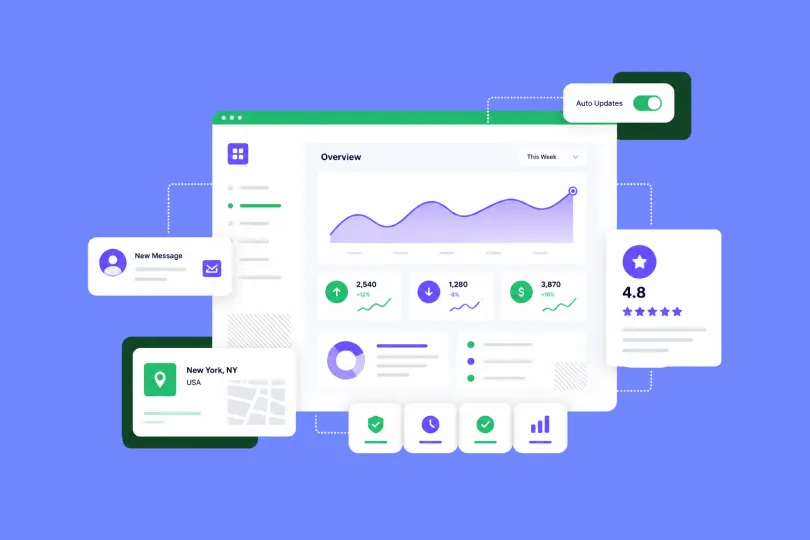
A PPC audit is a structured review of your paid advertising account. It identifies wasted spend and growth opportunities across campaigns, keywords, audiences, creative, bidding, landing pages, and attribution.
A useful Google Ads audit goes beyond asking whether the account has “good” CTR or cheap clicks. It needs to test whether those clicks become profitable customers.
That distinction matters, especially for growing brands. A campaign can report strong ROAS while over-crediting branded demand or pushing products with weak margins. It can also appear inefficient if the attribution window is too short for the real purchase cycle.
The audit, therefore, must connect platform activity with business economics. That means comparing spend with contribution margin, inventory priorities, new-customer revenue, and repeat purchasing. Otherwise, you’re optimizing a dashboard while the finance team quietly develops an eye twitch.
The Gurus’ Take
The useful response here is diagnosis, not drama. At OMG, we start by separating a ranking change from a business change. A page can lose positions while qualified traffic holds steady or gain visibility for terms that never convert.
Check query groups, landing pages, device types, locations and SERP features before deciding the site has been “hit”. Then compare organic movement with paid search, direct traffic and conversion data. If every channel dipped, the culprit may be demand, tracking or seasonality rather than Google.
Another thing worth noting is timing. Weekend volatility can collide with lower search demand, delayed reporting and thinner conversion volumes, making ordinary noise look like an emergency. Give the data enough room to settle, but don’t use patience as an excuse for passivity. Record what moved, identify which templates or topics were affected, and check whether competitors gained the positions you lost.
If the movement persists, investigate content quality, intent alignment, internal linking, technical health and authority. Change only what the evidence supports. A calm audit usually beats a frantic rewrite, especially when Google hasn’t confirmed that anything formally changed. That discipline also gives stakeholders a clearer explanation than vague talk about algorithms.
Your Action Plan
- Compare July 18 and 19 against the previous four weekends, not just the day before.
- Segment performance by query, landing page, device, location and conversion value.
- Check Google Search Console alongside analytics and rank tracking. One dashboard rarely tells the full story.
- Review whether lost rankings were replaced by competitors, AI Overviews, local packs or other SERP features.
- Confirm that tracking, tagging, site releases and technical changes did not create the movement.
- Avoid broad content rewrites while volatility is still settling.
- Document affected pages and monitor them daily for at least one full business week.
Note for Australian brands: Australian businesses should separate national movement from state, city and local search changes. A stable national average can conceal losses in Sydney, Melbourne or Brisbane. Compare local rankings, store-level conversions and regional demand before deciding what needs fixing.
The GROWTH-10 PPC Audit Checklist
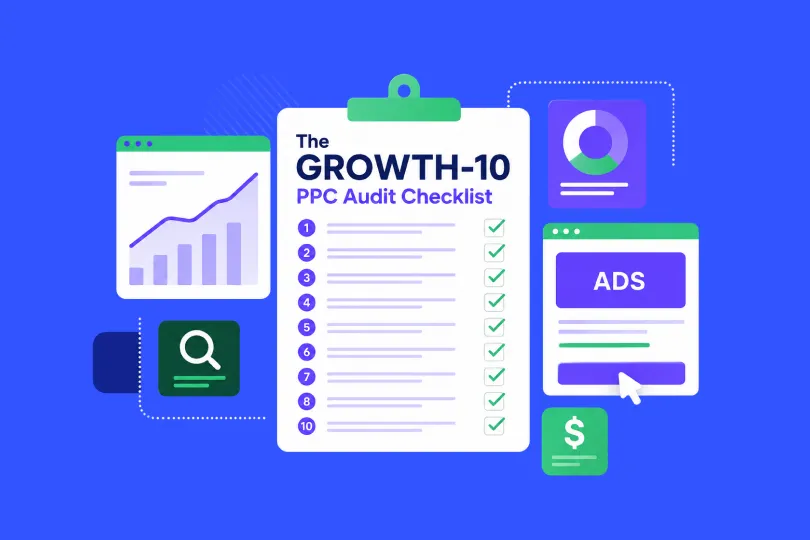
We call this the GROWTH-10 Framework, a PPC audit template we use to move from tracking integrity to commercial opportunity. If you’re learning how to audit a Google Ads account, run these checks in order. Remember, later findings are only reliable when the earlier foundations hold.
1. Conversion Goals & Tracking Accuracy
Test every purchase, lead, and micro-conversion from click to confirmation. That includes checking duplicate tags, missing events, incorrect values, and primary versus secondary actions. Primary actions can influence bidding, while secondary actions remain observational. A harmless-looking setup error can therefore train automation toward the wrong outcome.
2. Revenue & Margin Economics
Calculate performance by product margin, category, customer type, and discount level. Blended ROAS can make a campaign look healthy while low-margin products swallow the profit. Failure looks like aggressive spending behind revenue that leaves little contribution after the cost of goods, shipping, fees, and returns.
3. Revenue & Margin Economics
Inspect the actual searches triggering ads, rather than trusting the keyword list. Google’s search terms report shows which customer queries generated impressions and clicks. We look for irrelevant intent, research-heavy traffic, competitor leakage, and unexpected broad-match expansion. The expensive surprises usually live here.
4. Negative Keyword Coverage
Negative keywords stop ads from appearing against unwanted queries on applicable inventory. Check campaign-level lists, shared exclusions, conflicting negatives, and missed themes. Failure in this area looks like repeated spending on job seekers, free resources, repairs, wholesale queries, or products the business doesn’t sell.
5. Campaign Structure & Budget Control
Assess whether campaign architecture reflects product priorities and margins. Accounts often bundle unrelated categories together because setup was quicker that way. The result is muddy reporting and budget drift. High-volume products consume spend while strategic categories struggle to gather enough data to compete.
6. Performance Max Asset Groups
Review how Performance Max asset groups are divided, what products they contain, and whether the creative matches each commercial theme. Google recommends complete asset coverage and meaningful variations across text, imagery, and video. Trouble starts when one catch-all group pushes generic creative across products with different audiences and buying signals.
7. Audience Overlap & First-Party Signals
Map remarketing, prospecting, Customer Match, and Performance Max signals to find duplication. Audience signals help guide Google’s models, but unclear segmentation makes incrementality difficult to judge. Be careful not to have several campaigns chasing the same warm shoppers while reporting separate victories for the same eventual sale.
8. Geo Targeting & Location Leaks
Compare targeted locations with the user-location report and revenue by market. Remember, Google’s location settings can include people physically present in a location and those who merely showed interest in it. That distinction matters when you only ship to selected states or serve a defined radius.
9. Ad Relevance & Quality Score
Examine expected CTR, ad relevance, and landing-page experience at the keyword level. Google describes Quality Score as a diagnostic tool, not a KPI or direct auction input. A low score should point you toward friction. It shouldn’t automatically justify rewriting every ad while profitable campaigns sit untouched.
10. Attribution Windows & Reporting Truth
Review conversion windows, attribution settings, cross-device behavior, and differences between Google Ads, analytics, and backend revenue. Conversion-window choices affect which sales Smart Bidding counts and optimizes toward. The goal is to not have several platforms claiming the same sale or valuable delayed purchases disappearing from the paid-media story.
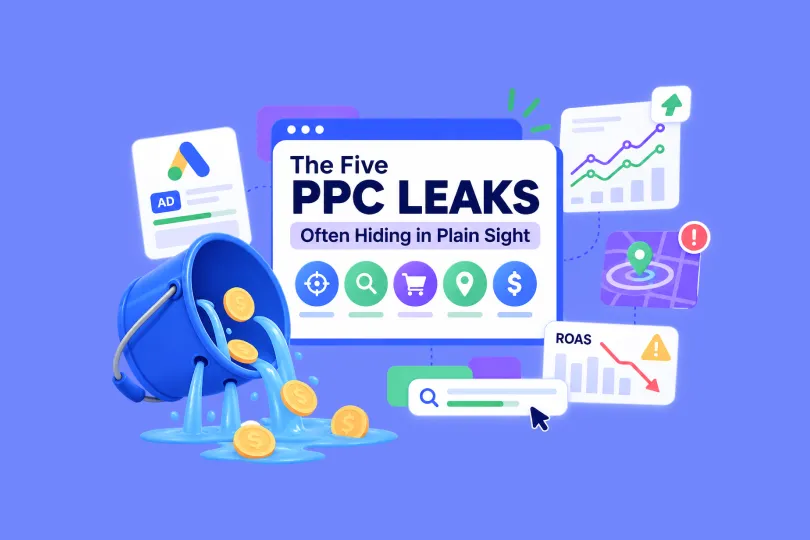
The Five PPC Leaks Often Hiding in Plain Sight
The account is optimizing toward noise
Newsletter signups, page views, or duplicate purchases are marked as primary conversions. The platform reports progress because it’s doing exactly what it was told. Unfortunately, it was told to chase the digital equivalent of someone browsing the window.
Search terms have drifted from buying intent
Broad match has expanded into informational, employment, or adjacent-product searches. Nobody has reviewed the search terms report closely enough or built a negative keyword system. Spend keeps moving, so the account still looks active. However, activity and progress are not synonyms.
Performance Max is hiding product-level problems
Several product categories sit inside one campaign with one blended target. Strong sellers carry weak ones. High-margin products cannot secure a consistent budget. The headline ROAS looks respectable, but the merchandising team knows the revenue mix is wrong.
Geographic settings are broader than the business model
Campaigns target Dallas, Texas, or the United States, but location options and exclusions tell a different story. Clicks arrive from markets the business cannot serve economically. Though relatively small, these leaks become serious once the account begins scaling.
ROAS is reported without margin context
The agency celebrates a revenue number. The business absorbs discounting, returns, shipping, and cost of goods. A live eCommerce account can often improve without spending more, simply by steering budget toward products and customers that produce stronger contributions.
What Our PPC Audit Uncovered For T.C. Boxes
A checklist tells you what to inspect. A live account shows why it matters.
T.C. Boxes is an Australian eCommerce brand selling 4×4 storage products, including toolboxes, trays, canopies, and accessories. With a large product catalog and customers shopping across categories, paid media had to connect the right products with the right buyers, then prove which campaigns were producing profitable revenue. Our Google Ads audit uncovered inefficiencies, disorganized audiences, and unreliable pixel tracking.
With these findings, we proceeded to tighten keyword targeting, expand the negative keyword lists, and introduce tailored Dynamic Search Ad and Google Shopping campaigns. We also repaired the tracking setup and connected an automated Shopify product feed, so Google had cleaner data and shoppers more relevant ads.
The result was a 100% year-over-year increase in ROAS, reaching a 15:1 return. Conversion value rose 100%, average CTR increased 186%, and PPC-assisted conversions climbed 144%.
As it turns out, there was no secret switch or theatrical dashboard reveal. They just needed to feed better information into every bid.
Should You Audit PPC Yourself or Engage an Agency?
If performance has slipped, the first instinct is usually to open Google Ads, change a few settings, and hope the numbers behave. Sometimes that works. Sometimes it just moves the leak.
The right option depends on account complexity, internal expertise, and whether you need an independent view of what’s really happening. Here’s a quick guide:
| Audit area | Do it yourself | Free platform audit | Full agency audit |
| Account depth | Depends on operator skill | Automated recommendations | Manual, account-wide diagnosis |
| Tracking validation | Basic tag checks | Limited tracking alerts | Full conversion journey review |
| Business economics | You supply the context | Usually platform ROAS | Margin and revenue analysis |
| Channel perspective | Often account-specific | One platform only | Paid search and social context |
| Final output | Your own task list | Optimization suggestions | Prioritized commercial roadmap |
A DIY review works for routine housekeeping. It’s useful for small business PPC management when the account is simple and the owner understands the sales data.
A full audit becomes more valuable when spend is scaling, several channels claim the same revenue, or previous PPC management services have left the account difficult to trust.
PPC Audit FAQs
We recommend running a focused account review every month and a full PPC audit at least quarterly.
You should also conduct one after major tracking changes, a website migration, a product-range shift, rapid budget growth, or a sudden performance decline. Daily PPC management catches tactical problems. A deeper quarterly audit tests whether the account structure and commercial assumptions still make sense.
A serious PPC audit can take several hours to several days, depending on account size, campaign history, and tracking complexity.
A small Search account may be reviewed quickly, but, say, an eCommerce setup using Search, Shopping, PMax, remarketing, and offline data needs more investigation. Time spent is not the real benchmark. The output should be specific enough that another specialist could act on it without guessing.
The most common problems are inaccurate conversion tracking, irrelevant search terms, weak negative-keyword coverage, poor campaign structure, and budget allocated without margin context.
We also regularly find broad geographic targeting, overlapping audiences, neglected PMax creative, and attribution settings that exaggerate or understate results. The common thread is rarely one catastrophic mistake but accumulated leakage.
Yes. You can audit your own account if you understand the platform and have access to accurate sales data.
It’s best to start with conversion testing. Then review search terms, locations, devices, products, margins, and campaign goals. That said, the limitation is objectivity, because it’s easy to normalize a structure you built yourself. An external audit is useful when performance has plateaued or previous fixes keep producing temporary gains.
A good ROAS is one that produces acceptable profit after your real costs. And that depends on your margin.
A 4:1 ROAS means four dollars in revenue for every dollar spent on ads. That may look excellent. Yet a business with a 25% gross margin is only at its basic advertising break-even point before overhead and other variable costs. Therefore, judge ROAS by margin, not applause.
Our audit costs you nothing. It’s valued at $4,000 and gives you a detailed view of wasted spend, measurement gaps, and growth opportunities.
The catch is pleasantly uneventful. We’ll show you what we found and explain how we would fix it. You’re not required to appoint OMG for ongoing PPC management. Any future scope is discussed separately in a strategy session.
It’s your data, and you’ll always have access to it.
We work within client-owned advertising and analytics assets wherever possible. You retain visibility into campaigns, performance history, and reporting. Our proprietary reporting tech, Gurulytics, then helps connect channel activity with meaningful outcomes, so you’re not waiting for a polished month-end PDF to discover what happened three weeks ago.
Find The Leaks Before They Consume Another Month Of Margin
At the end of the day, a strong PPC account should turn every campaign and product feed into profitable growth. That starts with accurate tracking, tighter targeting, and a clear view of which revenue is actually worth chasing.
If you’re interested in specialist help but would like to dip your toe in the water first, start with OMG’s free Google Ads audit valued at $3,000, delivered within 48 hours. Our paid-media consultants will examine tracking, search terms, PMax, targeting, attribution, and ROAS by margin.
The free PPC audit is a great way to leverage our 14 years of experience, Google Premier Partner expertise, and results across more than 600 national and international brands. Reach out to us or swing by our Dallas office for questions or concerns.

About the author
Read More Blogs
-


Last updated on:
-
18 minutes read
Social Media Advertising in Dallas Fort Worth: How to Measure Facebook, Instagram and LinkedIn Ads by Revenue
Last updated on:
-
27 minutes read
Digital Marketing in Dallas-Fort Worth: How Local Businesses Can Turn Market Growth Into Measurable Revenue
Last updated on:




Stop Guessing What Your Marketing Should Do Next.
Your free $4,000 strategy session shows where your digital marketing is leaking performance across search, paid media, content and conversion. You leave knowing what to fix first and what a stronger strategy could produce.