
Social Media Advertising in Dallas Fort Worth: How to Measure Facebook, Instagram and LinkedIn Ads by Revenue

Last updated:
21 May 2025
|
18 minutes readKey Takeaways
- Creative is part of the targeting mechanism. Medik8's 12.11x Meta ROAS came from continuous creative and audience testing, not one concept run indefinitely.
- Prospecting and retargeting need different messages, and paid social should be measured alongside search because customers move between channels before converting.
- On LinkedIn, B2B buying groups average 13 internal stakeholders, so lead quality, CRM connection and pipeline matter more than form volume.
Facebook Ads in Dallas Should Be Measured Against Business Outcomes
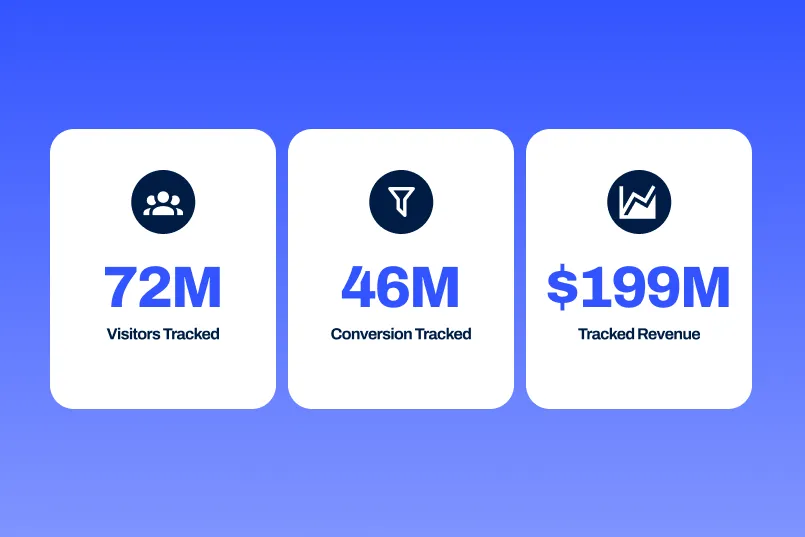
OMG currently reports more than $199 million in tracked revenue, 72 million website visitors and 46 million tracked conversions across paid social client activity over the last 12 months. Its Facebook Ads offering also highlights Meta Pixel and Conversions API tracking as part of its approach to connecting advertising activity with leads, sales and revenue.
That matters because reach is one of the easiest social metrics to produce and one of the easiest to misunderstand.
An advertisement can reach hundreds of thousands of people while generating limited commercial value if the audience is poorly matched, the offer is unclear or the conversion process creates friction. A smaller audience can produce meaningful revenue when the people being reached are highly relevant and the economics make sense.
The first question should therefore be what the campaign is expected to accomplish.
An ecommerce campaign can be evaluated through purchases, revenue, contribution margin, customer acquisition cost and return on ad spend. A lead-generation campaign needs to move beyond form submissions and examine qualified leads, opportunities and customers. A longer sales cycle may require consideration of website behavior, content engagement, target-account activity and subsequent sales outcomes.
These objectives should not be measured with the same scorecard.
Paid social reporting should explain what changed, why it changed and whether the change created meaningful commercial value.
Tracking Beyond Platform Reporting
A campaign dashboard can tell you what happened on the advertising platform, but it may not tell you what happened after a lead entered the business.
Meta Pixel and Conversions API can help connect website events and conversions with paid social campaigns, while CRM integration can provide additional information about opportunities and customers. OMG highlights these tracking systems within its Facebook Ads methodology.
The technical setup varies by business, but the strategic question is consistent: what is the campaign actually optimizing toward?
For ecommerce, that may be purchases and revenue. For a local service company, it may be qualified calls or booked appointments. For professional services, it could be consultation requests meeting specific criteria. For B2B, it may be sales-qualified opportunities or pipeline value.
Without that definition, a platform can optimize toward an event that is convenient to measure but commercially weak.
This is particularly risky with lead generation, where a platform can become increasingly efficient at producing form submissions without producing more valuable opportunities.
ROI Depends on Customer Value
Spending $500 to acquire a $300 customer is not sustainable simply because the campaign produced a conversion. The same $500 acquisition cost could be commercially viable for a customer whose initial purchase is $10,000 and whose relationship with the company continues.
The platform reports cost per result. The business needs to understand cost per valuable customer.
For ecommerce, this can include contribution margin and repeat-purchase behavior. For local services, it can include job value, travel costs, cancellations and repeat work. For B2B, it can include contract value, close rate, sales-cycle length and account expansion.
Paid social ROI therefore needs to be considered in the context of the value the campaign creates.
Do Not Build Around Vanity Metrics
One million impressions can create awareness, but impressions do not establish whether a campaign made money.
Reach explains exposure. Video views can show whether content holds attention. Click-through rate can indicate how compelling an advertisement is relative to its audience.
Those metrics are useful, but they should not become the definition of success.
For lead generation, reporting should eventually include qualified leads, opportunities and revenue. For ecommerce, revenue and contribution margin may matter more. For B2B, pipeline and closed business are stronger commercial indicators. For local services, booked jobs and customer value provide a clearer picture.
Media metrics explain performance. They should not replace business outcomes.
Instagram Advertising in Dallas Depends on Better Creative Testing
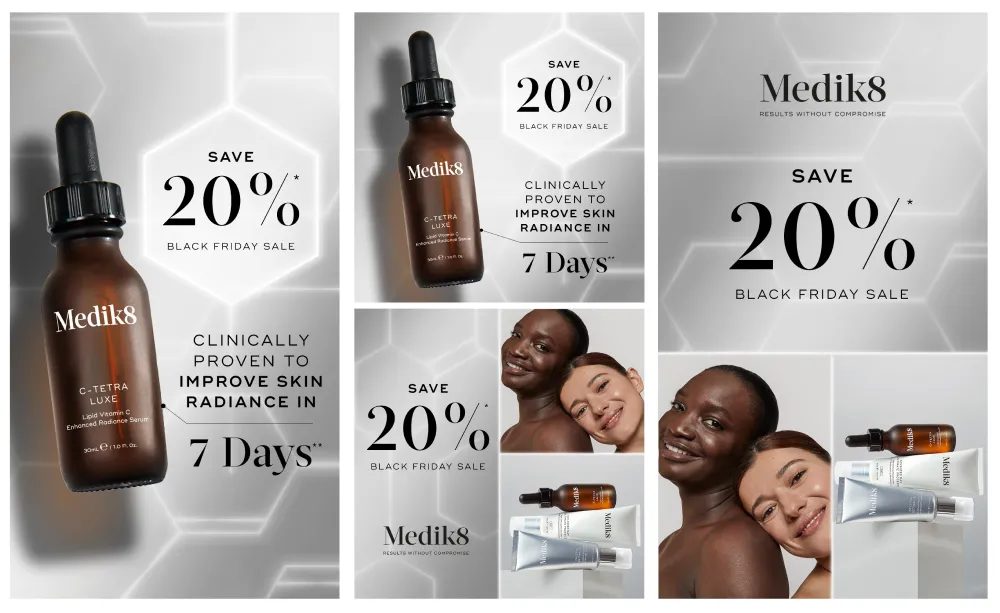
OMG reports a 12.11x Meta Ads ROAS for Medik8 from June 2025 through May 2026, alongside a 32% year-over-year increase in click-through rate to 2.09% and a 54.78% year-over-year improvement in ROAS. The campaign used creative testing, audience refinement and full-funnel optimization.
The takeaway is not that another Dallas business should expect the same return. The useful lesson is that performance can improve when creative and audiences are continuously tested rather than relying on one concept indefinitely.
On Instagram, creative is part of the targeting mechanism. A prospect decides whether an advertisement is relevant before interacting with it, and sophisticated targeting cannot compensate indefinitely for creative that fails to communicate a clear proposition.
A home services company might test problem-focused creative against before-and-after demonstrations, customer proof or an offer-led approach. A professional services company could compare educational content with case studies. An ecommerce brand might test demonstrations, reviews, creator content, product benefits and promotions.
The question is not simply which advertisement looks best. It is which combination of message, format and audience produces the strongest commercial response.
Testing also needs to be structured well enough to produce useful information. If the audience, creative, offer and landing page all change simultaneously, performance may change without revealing what actually caused it.
A strong paid social program should gradually build a library of commercial intelligence: which problems attract attention, which propositions create consideration, which creative formats perform with different audiences and which offers produce customers.
1. Build Around Creative Fatigue
OMG reports a 32% year-over-year increase in Medik8’s Meta Ads click-through rate and a 54.78% improvement in ROAS after ongoing audience refinement and creative testing.
Creative fatigue is a performance issue, not simply a production issue.
An advertisement can start strong and gradually lose efficiency as the same audience sees similar messages repeatedly. Increasing spend can make that problem worse when budget is being used to reach people who are becoming less responsive.
The solution is not always a new design. Sometimes the proposition needs to change. Sometimes the format needs to change. Sometimes the audience or offer is the problem.
OMG’s Medik8 case study illustrates the value of testing different audience strategies, creative formats, educational messaging, benefit-led content, product-focused retargeting and seasonal angles.
A mature social account should continuously learn which combinations create meaningful action.
2. Treat the Offer as a Strategic Variable
One advertisement can perform differently simply because the proposition changes, even when the audience and media buying remain similar.
A free consultation, discount, assessment, downloadable guide, booking incentive and direct purchase request each ask customers to take a different action.
The offer should match the audience’s level of intent.
Someone unfamiliar with a brand may watch educational content but resist a sales call. A product-page visitor may be ready for a purchase incentive. A B2B executive may download a benchmark report before agreeing to a meeting.
The goal is not to make every offer more aggressive. It is to make the next action appropriate to the customer’s current level of familiarity and intent.
3. A Testing Roadmap: Audience, Creative and Offer
Three variables deserve continuous attention in paid social: audience, creative and offer.
The audience determines whether the business is reaching people with a credible reason to buy. Creative determines whether those people notice and understand the proposition. The offer determines whether they have enough reason to take the next step.
Landing-page performance then determines what happens after the click.
When performance deteriorates, the team should be able to identify which part of the system is responsible rather than simply increasing budget or rebuilding everything.
A strong agency creates a learning loop: test, measure, interpret, refine and test again.
The result should be a growing body of knowledge about what creates customers, not simply a monthly report showing more impressions.
Dallas Social Media Advertising Should Separate Prospecting From Retargeting

OMG reports a 2.09% Meta Ads click-through rate for Medik8 during the 12 months ending May 2026, above its 1.50% internal benchmark. Its approach separated new-customer prospecting from higher-intent retargeting.
That distinction applies across industries.
Someone who has never heard of a Dallas business should not necessarily receive the same advertisement as someone who has visited the website several times, read a service page or watched a product video.
Prospecting audiences need context. Retargeting audiences already have some familiarity with the company and can therefore receive more specific messaging.
A prospecting advertisement might introduce a problem, explain a service, demonstrate a product or establish credibility. Retargeting can address objections, provide proof, explain a specific product or encourage the next action.
This becomes particularly useful for businesses with longer consideration periods. A commercial roofing prospect may compare contractors before requesting a quote. A prospective patient may research multiple providers. A business owner may revisit accounting firms several times before making contact.
Paid social can support those journeys, but the campaign has to recognize where the prospect is in the decision-making process.
Retargeting Can Recover Demand That Did Not Convert the First Time
One website visit does not equal one buying decision. Customers may still be researching, comparing providers, waiting for approval or deciding whether the timing is right.
Retargeting keeps a business visible during that consideration period, but effective retargeting is more sophisticated than showing the same advertisement again.
Someone who viewed a homepage can receive a different message from someone who visited a specific service page. Someone who abandoned a product cart can receive a different message from someone who only watched a video. Existing customers should also be treated differently from completely new prospects.
This becomes particularly valuable when paid social works alongside search.
A prospect might first discover a company through Meta, search for the company name later and eventually convert through organic search. Depending on the attribution model, the final conversion may be credited to search.
That does not mean social created the entire sale, but it also does not mean social had no role.
The purpose of attribution is to understand how channels contribute to the customer journey rather than forcing every conversion into a single-channel explanation.
Paid Social Needs to Work With Search
One customer can interact with multiple channels before converting, which means last-click attribution can overstate the contribution of the final interaction and understate the role of earlier touchpoints.
That is why paid social works best as part of a broader marketing system involving Google Ads, SEO, conversion rate optimization, email and analytics.
Consider a prospect who sees a social advertisement for a commercial service but does not click. Later, that prospect searches for the brand, visits the website organically and submits a consultation request.
The final conversion may be recorded under organic search, but the customer’s journey started elsewhere.
The same pattern can occur in ecommerce, where social introduces a product, organic search captures additional research and email eventually closes the sale.
Businesses do not need to force every channel to receive equal credit. They need enough visibility into the customer journey to make better budget decisions.
Build Demand Before the Customer Searches
Search is often the final expression of demand rather than the beginning of it.
A customer who sees useful content from a Dallas financial services company today may not need its services for months. A homeowner may save a contractor’s advertisement for future reference. A business executive may read thought leadership long before contacting sales.
A campaign does not necessarily fail because the customer did not convert immediately.
For upper-funnel activity, useful indicators can include qualified website traffic, engagement, video consumption, brand searches and assisted conversions. For lower-funnel activity, measurement should become more direct: leads, purchases, appointments, opportunities and revenue.
Trying to make every social campaign perform like direct response can create poor audience and creative decisions. Trying to justify direct-response campaigns using only awareness metrics creates the opposite problem.
The campaign objective needs to be clear before launch.
Become More Relevant as the Customer Gets Closer to Buying
A customer can move through several stages before becoming a sale, and the message should change accordingly.
Early in the journey, education may matter most. In the middle, customers may need proof. Closer to conversion, they may need a specific offer, service explanation, testimonial or comparison.
That is why full-funnel paid social is more than placing the same campaign into different audience buckets.
OMG’s Medik8 campaign provides an example, using educational and benefit-led messaging for prospecting and more product-specific, offer-driven creative for higher-intent retargeting.
The same principle applies across Dallas industries. Someone unfamiliar with a company needs a reason to remember it. A website visitor needs a reason to return. A returning prospect needs a reason to convert. A past customer may need a reason to buy again.
The campaign architecture should reflect those differences.
200% More Social Leads: What an Integrated Campaign Can Produce
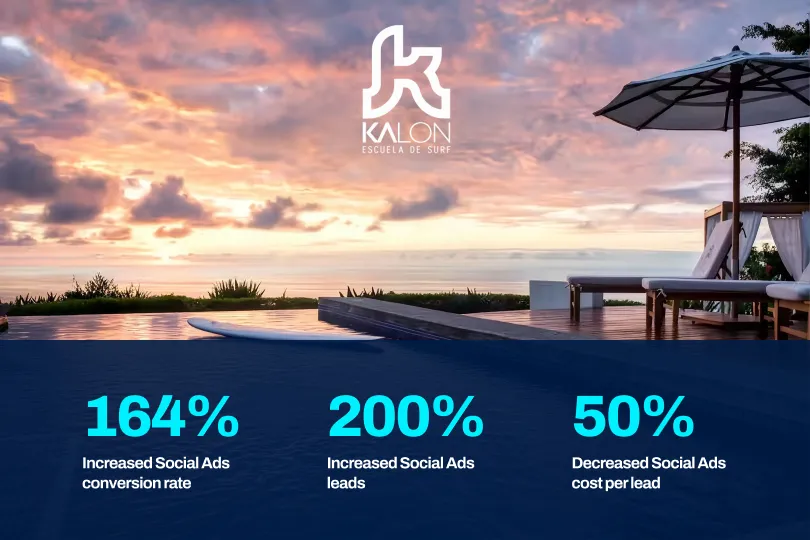
OMG reports a 200% increase in social advertising leads for Kalon Surf over a 12-month period, alongside a 164% increase in social advertising conversion rate and a 50% reduction in social advertising cost per lead. The campaign operated alongside SEO and PPC.
The useful lesson is integration.
Social advertising can become more valuable when it works with other demand sources. A prospect can discover a business through social, search for it later, visit organically and eventually convert through paid search or direct traffic.
Channels can be measured independently while the overall strategy recognizes that customers move between them.
The objective is not to make every channel look equally successful. It is to make the acquisition system work together.
LinkedIn Ads in Dallas-Fort Worth Require a Different Standard
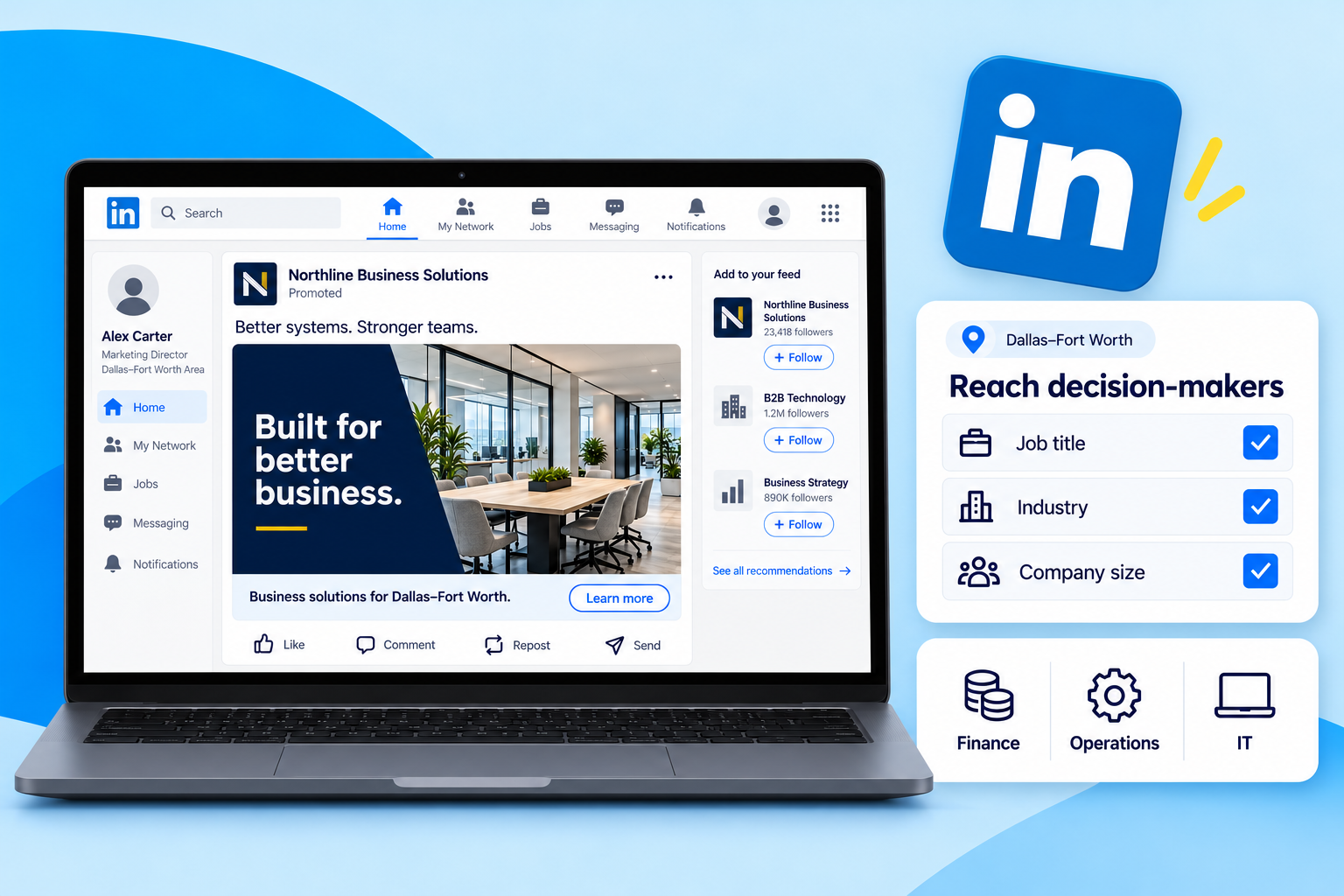
LinkedIn’s September 2026 research reports an average of 13 internal stakeholders and nine external participants involved in B2B buying decisions. That illustrates why individual lead volume is not always an adequate measure of B2B demand.
DFW’s economy makes this particularly relevant. Fort Worth has a larger share of employment in trade, transportation and utilities and manufacturing, while Dallas has a larger share in professional and business services and finance.
Different industries create different buying groups.
A logistics company may need to reach operations leaders, distribution executives and procurement teams. A financial services company may need CFOs, finance teams and business owners. A technology company may have stakeholders across IT, operations, finance and executive leadership.
A LinkedIn campaign that simply targets a job title and sends every prospect to the same landing page leaves much of that complexity unaddressed.
The CFO may want financial impact. Operations may care about implementation. IT may care about integration and security. An executive sponsor may care about broader business results.
Effective B2B paid social accounts for those differences while maintaining a consistent commercial proposition.
Prioritize Lead Quality Over Volume
More leads do not necessarily create more pipeline.
OMG’s LinkedIn offering focuses on lead quality, form questions, follow-up paths, CRM connection and measuring qualified opportunities and revenue contribution beyond clicks and form submissions.
That matters because an unqualified lead still consumes sales resources.
If 100 leads produce five genuine opportunities, the headline lead count tells an incomplete story. A campaign producing 30 highly qualified leads and 10 opportunities may be commercially more useful even if its cost per lead is higher.
This is why paid social should connect with the CRM wherever practical.
The advertising platform knows what happened inside the campaign. The CRM knows what happened after the lead entered the business. The business needs both sets of information.
For DFW B2B companies with sales cycles lasting several months, that connection becomes even more important because the original advertisement can be far removed from the eventual contract.
Connect With the Sales Team
A lead only becomes revenue when the business has an effective process for handling it.
A Dallas home services company generating 100 leads but taking several days to respond has a different problem from the one it may think it has. A B2B company generating strong opportunities but routing them poorly has a sales-process issue, not necessarily an advertising issue.
Marketing should therefore review lead quality, sales outcomes, service eligibility, close rates and rejection reasons.
If many leads are outside the service area, targeting may need attention. If prospects consistently expect a lower price, the offer or positioning may need attention. If leads are qualified but do not book, the landing page or follow-up process may need attention.
Paid social becomes more valuable when these insights are fed back into audience, creative and campaign decisions.
Manage Ecommerce and Lead Generation Differently
Two major conversion models dominate paid social: transactions and opportunities.
Ecommerce can often observe the transaction directly. A customer sees the advertisement, clicks, purchases and generates measurable revenue.
Lead generation is different. The advertisement produces a lead, the lead is contacted, the prospect qualifies, sales begins and the business eventually wins or loses the customer.
That difference should shape campaign structure and measurement from the beginning.
An ecommerce advertiser can test products, bundles and offers with relatively immediate feedback. A lead-generation advertiser needs greater attention to qualification and downstream revenue.
For a Dallas roofing company, medical practice, law firm or commercial contractor, fewer high-quality leads may be more commercially useful than a large volume of low-quality inquiries.
The campaign has to be evaluated against the business model.
FAQs on Social Media Advertising in Dallas
Start with the customer, not the platform. Meta (Facebook and Instagram) suits consumer prospecting, remarketing and ecommerce. LinkedIn suits professional audiences and complex B2B buying groups, which average 13 internal stakeholders. TikTok suits discovery and creative-led demand generation when the audience and business model fit. Ask where your customers spend attention, whether they are actively searching or need demand created, how long the buying journey is and what a conversion is worth. Platform selection follows those answers.
Connect ad spend to what happens after the lead enters the business. Meta Pixel and Conversions API link website events to campaigns, and CRM integration shows which leads became opportunities and customers. Then compare cost per valuable customer, not cost per result, against margin, job value or contract value. Spending $500 to acquire a $300 customer is not sustainable, while the same $500 can be excellent for a $10,000 customer with repeat purchases.
Prospecting reaches people who have never heard of your business and needs context: a problem, a service explanation, a demonstration or credibility. Retargeting reaches people who already visited a page, watched a video or abandoned a cart, and can be more specific: proof, objection handling, a particular product or a direct next step. The two should be separate campaigns with different creative, offers and measurement, because someone visiting a service page for the third time should not see the same ad as a cold audience.
Against business outcomes, not media metrics. Reach, video views and click-through rate explain performance, but reporting should end in qualified leads, opportunities, revenue or contribution margin depending on the business model. OMG currently reports more than $199 million in tracked revenue, 72 million website visitors and 46 million tracked conversions across paid social clients over the last 12 months, using Meta Pixel and Conversions API tracking plus CRM connection so the monthly report explains what changed, why, and where the next dollar should go.
The Right Social Media Advertising Strategy Makes the Budget Accountable
8.48 million people make DFW one of the largest markets in the country, but businesses still need to earn the attention of the customers who matter.
The opportunity is significant, but scale alone does not create efficiency.
Dallas businesses need social advertising that understands the difference between Dallas and Fort Worth, established markets and rapidly growing suburbs, B2B buying groups and consumer audiences, and a lead that fills out a form versus a customer who generates revenue.
That requires more than media buying. It requires market analysis, audience strategy, creative testing, conversion optimization, tracking and disciplined reporting.
A strong paid social program should explain where the budget is going, which audiences are responding, what creative is working, which opportunities are being created and whether the resulting customers justify the investment.
For businesses competing across Dallas-Fort Worth, that accountability matters because the market is too large and diverse to treat paid social as a branding exercise.
The businesses that approach social advertising strategically can use the channel to create demand, capture interest, develop relationships and drive measurable commercial outcomes across DFW.
That is the difference OMG brings to paid social: a specialist approach built around the numbers behind the advertising and the business results those numbers are expected to produce.
If you want to know which audiences, creative and offers are producing customers for your Dallas-Fort Worth business, and which are only producing activity, talk to OMG’s paid social team.
Related Blogs
Social Media Marketing
5 minutes read
Social Media Advertising in Dallas-Fort Worth: How to Target Before you Spend

Last updated on:
October 19 2026
Social Media Marketing
10 minutes read
Reddit Ads: What They Cost & When They Beat Meta
Last updated on:
September 1, 2026

About the author
Read More Blogs
-


Last updated on:
-
18 minutes read
Social Media Advertising in Dallas Fort Worth: How to Measure Facebook, Instagram and LinkedIn Ads by Revenue
Last updated on:
-
27 minutes read
Digital Marketing in Dallas-Fort Worth: How Local Businesses Can Turn Market Growth Into Measurable Revenue
Last updated on:


Stop Guessing What Your Marketing Should Do Next.
Your free $4,000 strategy session shows where your digital marketing is leaking performance across search, paid media, content and conversion. You leave knowing what to fix first and what a stronger strategy could produce.