Social Media Advertising in Dallas Fort Worth: Targeting Strategy Before You Spend

Last updated:
21 May 2025
|
15 minutes readKey Takeaways
- DFW is not one audience. 55% of the region's places grew 5% or more between 2020 and 2025 while 22% declined, so geography should be segmented when it changes customer value.
- There is no universal good cost per lead in Dallas. There is a cost per qualified opportunity that makes sense for each business.
- Answer four questions before scaling budget: who is worth reaching, why should they care, what should they do next and what is that action worth.
Why Social Media Advertising in Dallas-Fort Worth Needs a Strategy, Not a Boost Button

Dallas-Fort Worth is a large, expanding and increasingly competitive market, creating more opportunities for businesses to reach potential customers through social media advertising. But a larger audience does not automatically translate into better advertising results. The real opportunity lies in identifying the customers most likely to buy, understanding what influences their decisions and building campaigns around those factors.
For DFW businesses, social media advertising should be more than putting an advertisement in front of as many people as possible. Effective paid social connects audience targeting, creative, messaging and budget strategy to a measurable business objective, whether that means generating leads, increasing sales, driving website traffic or building demand for a specific service.
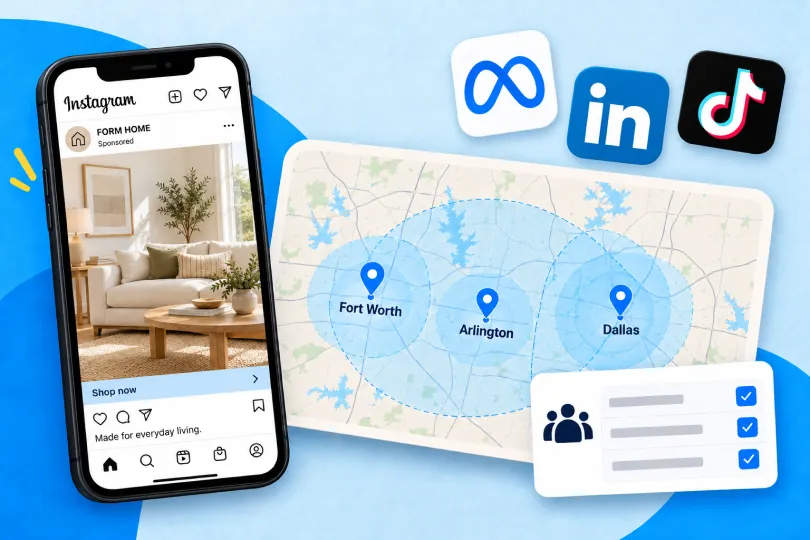
Platforms such as Meta, Instagram, LinkedIn and TikTok provide sophisticated advertising tools, but the platforms themselves do not determine who a business should target, what proposition will resonate with that audience or how much it makes sense to spend to acquire a customer. Those decisions require an understanding of the business, its customers, its market and the economics behind the sale.
In a market as geographically diverse and commercially competitive as Dallas-Fort Worth, that strategic foundation is what separates simply running social media ads from building a paid social campaign designed to produce measurable business results.
Social Media Advertising in Dallas Requires More Than DFW-Wide Targeting
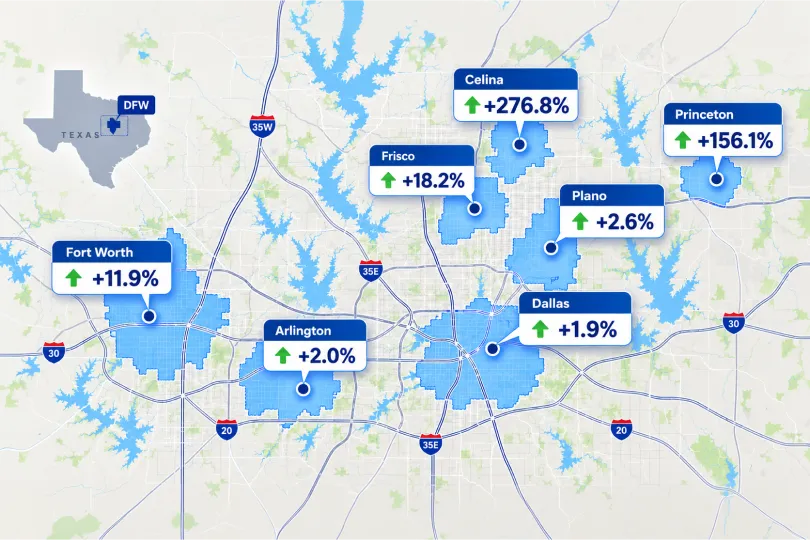
55% of the Dallas-Fort Worth places examined by the U.S. Census Bureau grew by at least 5% between 2020 and 2025, while 22% declined. DFW should therefore not be treated as one homogeneous local market when developing a paid social strategy.
A business headquartered in Dallas can encounter very different acquisition opportunities in Plano, Frisco, McKinney, Prosper, Celina, Arlington or Fort Worth. The differences may come from household characteristics, housing development, industry concentration, competition, customer demand or the company’s ability to serve each market profitably.
For a home services company, housing growth and homeowner concentration may be more important than broad population figures. A retail business may care more about proximity and store-level economics. A professional services firm could be targeting executives, business owners or specific professional groups rather than everyone within a geographic radius. A B2B company may care more about industry, company size and job function than the city where its prospects work.
A broad DFW campaign can work when the customer profile is broad and the platform has enough conversion data to optimize effectively. That does not eliminate geographic analysis. It means the advertiser should understand what is happening within the broader audience and know when segmentation can produce better commercial decisions.
The growth outside established business centers makes that especially relevant. Celina reached 64,427 people in 2025 from a 2020 base of 17,099, while Princeton reached 43,524 from 16,996.
For the right businesses, those communities are not simply additional locations to add to a targeting list. They represent expanding customer markets with their own competitive environments, service needs and acquisition opportunities.
A strong paid social strategy should identify when those differences affect performance.
1. Paid Social Strategy Should Follow Customer Economics
- $37.65 was Fort Worth’s average hourly wage in July 2026, while the city’s employment base was 11.5% above its February 2020 level. The significance of data like this is less about the individual figure and more about the different economic conditions operating within the same metroplex.
- Social advertising should be built around customer economics rather than audience size.
- Consider two businesses targeting DFW homeowners. One sells a $250 service that customers purchase once every few years. Another sells a $15,000 project that can lead to repeat work, referrals and additional services. They may target similar neighborhoods, but their acceptable customer acquisition costs will be very different.
- The same principle applies to B2B. A software company selling a $100,000 annual contract should not evaluate LinkedIn advertising using the same standards as a company selling $100 subscriptions.
- There is no universal “good” cost per lead for Dallas social advertising. There is a cost per qualified opportunity that makes sense for the individual business.
- A campaign that produces inexpensive leads but weak customers can be less valuable than one with a higher cost per lead that generates stronger close rates, higher customer value and more revenue.
- Those economics should be understood before advertising budgets are scaled.
2. Reflect the Difference Between Dallas and Fort Worth
- Fort Worth’s employment structure includes 23.9% of jobs in trade, transportation and utilities and 9% in manufacturing, compared with 19.5% and 6.5% respectively in Dallas. Dallas has a larger share of employment in professional and business services and finance.
- Those differences can inform B2B advertising strategy.
- A manufacturer targeting Fort Worth may find stronger relevance in messaging around production efficiency, supply chain or operational capacity. A professional services firm focused on Dallas may need creative around financial complexity, growth, risk or executive decision-making.
- That does not mean every campaign requires separate Dallas and Fort Worth campaigns. It means advertisers should understand whether geography and industry concentration materially affect customer value.
- Local expertise is not repeating “Dallas” in ad copy. It is understanding where customers are concentrated, what they need and how the competitive environment changes across the market.
3. Take Growth Corridors Seriously
Celina grew 276.8% between the 2020 estimates base and July 2025, while Princeton grew 156.1%. Those figures illustrate how quickly DFW’s outer markets are changing.
For businesses with expansion plans, “target DFW” is too broad to be a complete strategy.
A home improvement company entering a growing suburb may encounter more new homeowners and new construction. A healthcare provider opening a location may need awareness before sufficient branded search demand develops. A restaurant or retailer may need concentrated local awareness around a new opening.
Social advertising can create awareness before customers actively search.
That is one of the fundamental differences between social and search. Search captures expressed demand. Social can introduce the business before that demand is expressed.
Businesses can test new geographic markets through measurable campaigns before committing substantial resources, using engagement, website activity, leads and customers to determine whether additional investment is justified.
For established businesses, paid social can be used not only to capture existing demand but also to introduce a brand in markets where awareness is lower and future demand is developing.
Social advertising can create awareness before customers actively search, giving businesses a way to test market interest before making larger commitments.
Geographic tests can show whether a market produces sufficient engagement, website activity, leads and customers to justify additional investment.
4. Local Relevance Without Local Clichés
One common local advertising mistake is treating “Dallas” as the strategy rather than the market.
A business does not become locally relevant because its advertisement mentions Dallas repeatedly. Relevance comes from the reason the customer should care.
That might be a location-specific offer, customer proof from the area, content reflecting a local need or an expansion into a community where the business can genuinely serve customers.
For a growing service company, that could mean targeting suburbs where it can efficiently deliver services. For a restaurant, it could mean local creative around a new location followed by repeat-visit campaigns.
For B2B, geography may matter less than industry relevance because the target audience can be distributed throughout North Texas.
Local paid social therefore requires judgment. Geography should be used when geography creates commercial value.
Dallas Paid Social Strategy Should Know When to Go Broad and When to Segment
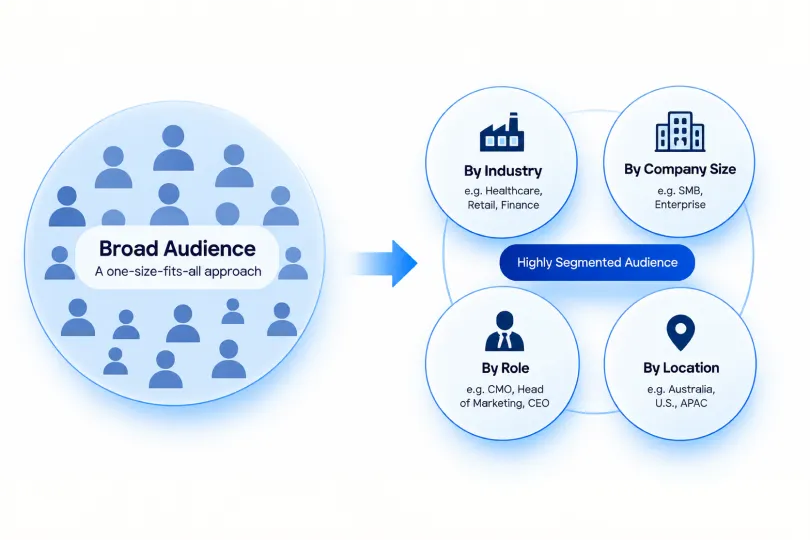
Modern social platforms increasingly rely on automated delivery, making strategic inputs more important rather than less.
Broad targeting is not automatically better, and segmentation is not automatically smarter.
A highly segmented campaign can look sophisticated while producing too little data for effective optimization. A broad campaign can spend beyond the customers who matter if the conversion signal and commercial objective are poorly defined.
The right structure depends on the business.
A high-volume ecommerce account may give automation more room to identify purchasing audiences. A niche B2B company selling specialized industrial equipment may need stronger audience definition. A Dallas restaurant may require straightforward geographic targeting, while a professional services company may need geographic and professional considerations together.
The goal is not complexity. It is useful information and efficient acquisition.
Use the Data the Business Already Owns
One of the most underused sources of paid-social intelligence is existing customer data.
Businesses already know who bought, who bought repeatedly, which services create strong margins and which locations generate valuable customers.
Where privacy-compliant data use and platform capabilities permit, that information should inform paid social.
Instead of simply targeting “people interested in home improvement,” a company can use historical customer information to understand which characteristics correlate with valuable customers and use those insights to guide campaign testing.
The same applies to B2B. A company may know which industries, company sizes and roles produce its strongest accounts. That is more useful strategic information than selecting a broad job-title category and hoping the platform finds the right people.
Audience modeling should begin with what the business already knows.
The Strategy Is Bigger Than the Platform
Meta, LinkedIn and TikTok can serve different commercial purposes even when they reach overlapping audiences.
Meta can support consumer prospecting, remarketing and ecommerce. LinkedIn can support professional audiences and complex B2B buying groups. TikTok can support discovery and creative-led demand generation when the audience and business model align with the platform.
The mistake is choosing a platform first and then searching for a reason to use it.
Start with the customer. Where do they spend attention? What content do they respond to? Are they actively searching for a solution, or does the business need to create demand? How long is the buying journey? What is the customer worth? What counts as a meaningful conversion?
Once those questions are answered, platform selection becomes easier.
The goal is not to advertise everywhere. It is to use the right channel mix for the business.
A Dallas Social Media Advertising Audit Should Answer 7 Commercial Questions
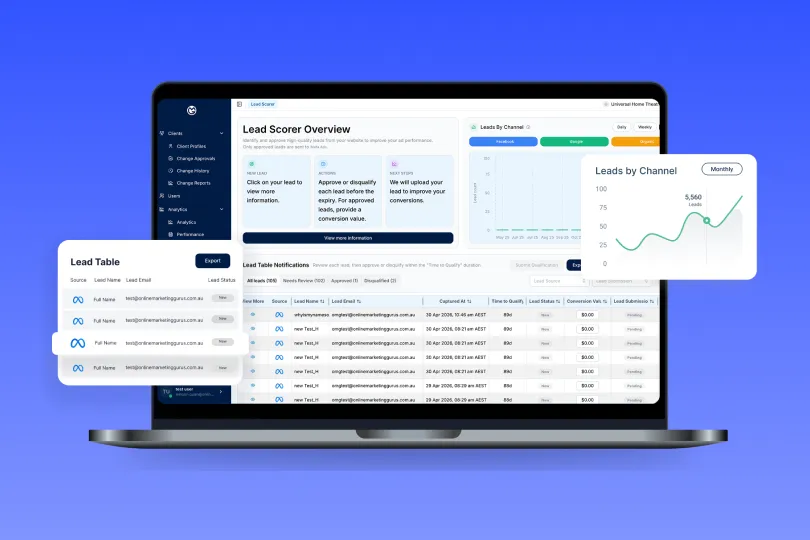
Seven questions can reveal whether a social account is being managed strategically:
1. Who is actually becoming a customer?
Customer profiles should come from business data rather than assumptions about who might be interested.
2. Which locations produce the strongest economics?
DFW is large enough that blended averages can hide meaningful differences between markets.
3. Which audiences create qualified opportunities rather than cheap leads?
Platform conversions should be compared with sales quality whenever possible.
4. Which creative concepts consistently produce action?
The business should understand whether performance comes from a message, format, offer or audience combination.
5. Where does the customer journey break?
If people click but do not convert, the problem may be the landing page, offer, trust or follow-up process.
6. What role does paid social play alongside search?
Social should be evaluated within the broader acquisition system rather than isolated from SEO, PPC, email and direct traffic.
7. What should receive more budget and what should receive less?
Budget decisions should follow evidence from customer value and campaign performance.
That is what strategy looks like.
Reporting Should Make the Next Budget Decision Easier
A monthly report should make it easier for a business owner to decide where the next dollar should go.
That means connecting spend, audience, creative, conversions, lead quality and revenue in a way that management can understand.
A business should know what happened, why it happened, what changed and what the agency recommends doing next.
This matters in DFW because broad market reach can generate substantial data quickly. A campaign running across Dallas, Fort Worth and surrounding suburbs can produce enormous amounts of information. The value comes from interpreting that information correctly.
The Dallas Social Media Advertising Market Rewards Precision
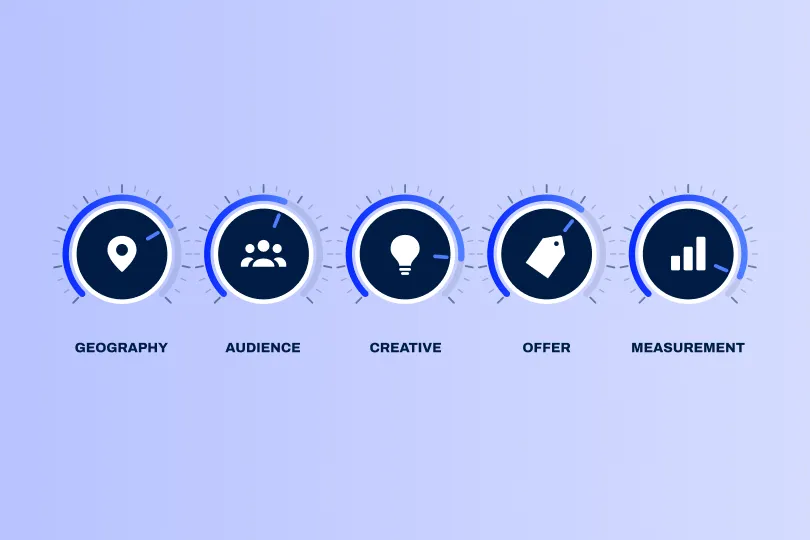
8.48 million people create an enormous addressable market, but reaching more people does not automatically create more revenue.
DFW is geographically diverse, economically varied and expanding unevenly. Its customers move through different buying journeys depending on whether they are purchasing a local service, ecommerce product, professional expertise or complex B2B solution.
Successful paid social therefore requires precision.
Precision in geography means understanding where customers are. Precision in audience means understanding who is worth acquiring. Precision in creative means knowing which messages earn attention. Precision in offers means giving customers a reason to act at the right stage. Precision in measurement means connecting advertising to qualified leads, customers and revenue.
The advantage of an experienced paid social team is not knowing how to press the boost button. It is knowing what to measure, what to test and what the results mean for the business.
Choose an Agency That Understands the Numbers
OMG currently displays a 5.0-star rating across more than 30 reviews on its paid-media pages and highlights experience across Meta, TikTok, LinkedIn and other paid social channels. Its Dallas office is located on West Mockingbird Lane, and its model combines paid social with paid search, SEO, CRO, analytics and creative expertise.
Local presence matters, but proximity alone should not determine an agency relationship.
A Dallas business should expect its agency to understand customer economics, competitive conditions, geography, channel roles and the tracking required to make informed decisions.
That may mean recommending more social investment. It may mean reducing spend, shifting budget into search, fixing conversion problems before increasing traffic or changing the offer. Sometimes the right answer is that a particular platform is not necessary.
Advertising budget should follow evidence.
It Is Not About Buying More Attention
An impression is media delivery. The business result comes afterward.
The customer has to notice the message, understand the proposition, trust the company, take the intended action and, in a lead-generation model, eventually become a customer.
For DFW businesses, paid social should account for population growth, expanding suburbs, differences between Dallas and Fort Worth, industry concentration, service areas and customer value.
It should also account for increasingly automated advertising platforms. As media buying becomes more automated, strategic inputs become more important: strong conversion signals, clear objectives, relevant creative, reliable tracking, useful customer data and appropriate offers.
Those are the levers a business can control.
Four Questions to Answer Before Increasing Budget
Four questions should be answered before increasing a Dallas social advertising budget: who is worth reaching, why should they care, what should they do next and what is that action worth?
The first requires customer and market data, including geography, service area, customer value and the audiences that actually produce revenue.
The second requires a proposition strong enough to earn attention in a crowded feed.
The third requires a conversion path that matches intent, whether that means consuming content, visiting a location, booking an appointment, requesting a consultation or completing a purchase.
The fourth requires enough understanding of acquisition economics to determine whether the campaign is producing commercially sustainable customers rather than inexpensive conversions.
Once those questions are clear, social advertising becomes easier to manage because the campaign has a defined commercial purpose.
The platform is the execution layer. The business strategy remains in control.
Why Dallas-Fort Worth Businesses Turn to OMG for Paid Social
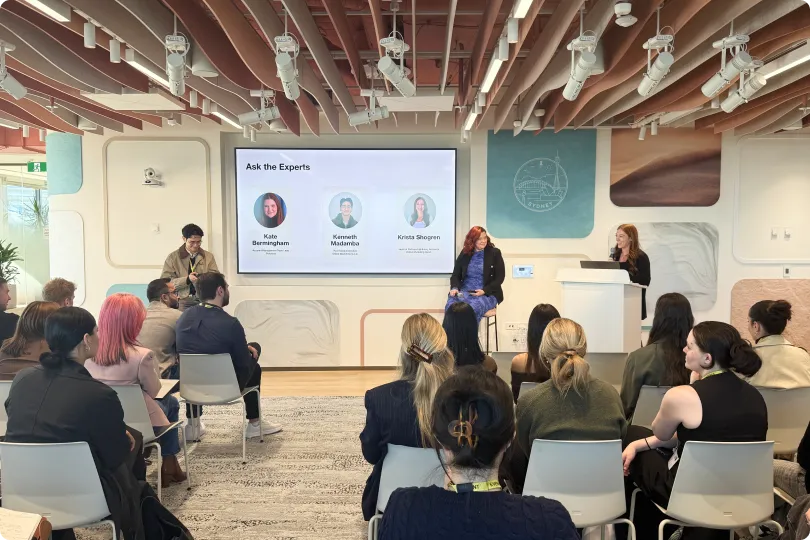
OMG has more than 14 years of digital marketing experience, platform-specific paid social specialists and named case studies with measurable outcomes across conversion rates, cost per lead, ROAS and revenue.
That experience matters because paid social is not a set-and-forget service.
Audiences need to be tested. Creative needs to evolve. Offers need to be assessed. Conversion signals need to remain accurate. Sales outcomes need to feed back into marketing. Budget needs to follow evidence.
OMG positions paid social as part of a broader digital strategy alongside SEO, PPC, CRO, analytics and creative rather than as a standalone channel.
For a Dallas-Fort Worth business, that creates a more useful way to think about paid social.
The question is not whether Facebook, Instagram or LinkedIn can generate attention. They can.
The question is whether the business has the strategy, tracking and optimization required to turn that attention into qualified demand.
That is where the difference between running social ads and managing paid social becomes clear.
FAQs on Social Media Advertising in Dallas
There is no universal cost, because the right number is a cost per qualified opportunity that makes sense for your business, not a market-wide cost per lead. A $250 one-off service and a $15,000 project with repeat work can target the same DFW neighborhoods with completely different acceptable acquisition costs. Budget should be set from customer value, close rate and sales cycle, then scaled only once tracking shows the campaign is producing customers rather than inexpensive form fills.
Segment geography when geography changes customer value. Broad DFW targeting can work when the customer profile is broad and the platform has enough conversion data to optimize. It fails when it hides big differences between markets: 55% of DFW places grew 5% or more between 2020 and 2025 while 22% declined, and Fort Worth’s industrial employment profile differs sharply from Dallas’s finance and professional services base. A home services company expanding into Celina or Princeton and a professional firm targeting Dallas executives need different geographic logic.
If you want to know which audiences, creative and offers are producing customers for your Dallas-Fort Worth business, and which are only producing activity, talk to OMG’s paid social team.
Related Blogs
Social Media Marketing
5 minutes read
Social Media Advertising in Dallas-Fort Worth: Facebook, Instagram and LinkedIn Ads That Drive Revenue

Last updated on:
October 19 2026
Social Media Marketing
10 minutes read
Reddit Ads: What They Cost & When They Beat Meta
Last updated on:
September 1, 2026

About the author
Read More Blogs
-

Last updated on:
-
 18 minutes read
Social Media Advertising in Dallas Fort Worth: How to Measure Facebook, Instagram and LinkedIn Ads by Revenue
Last updated on:
-
27 minutes read
Digital Marketing in Dallas-Fort Worth: How Local Businesses Can Turn Market Growth Into Measurable Revenue
Last updated on:


Stop Guessing What Your Marketing Should Do Next.
Your free $4,000 strategy session shows where your digital marketing is leaking performance across search, paid media, content and conversion. You leave knowing what to fix first and what a stronger strategy could produce.